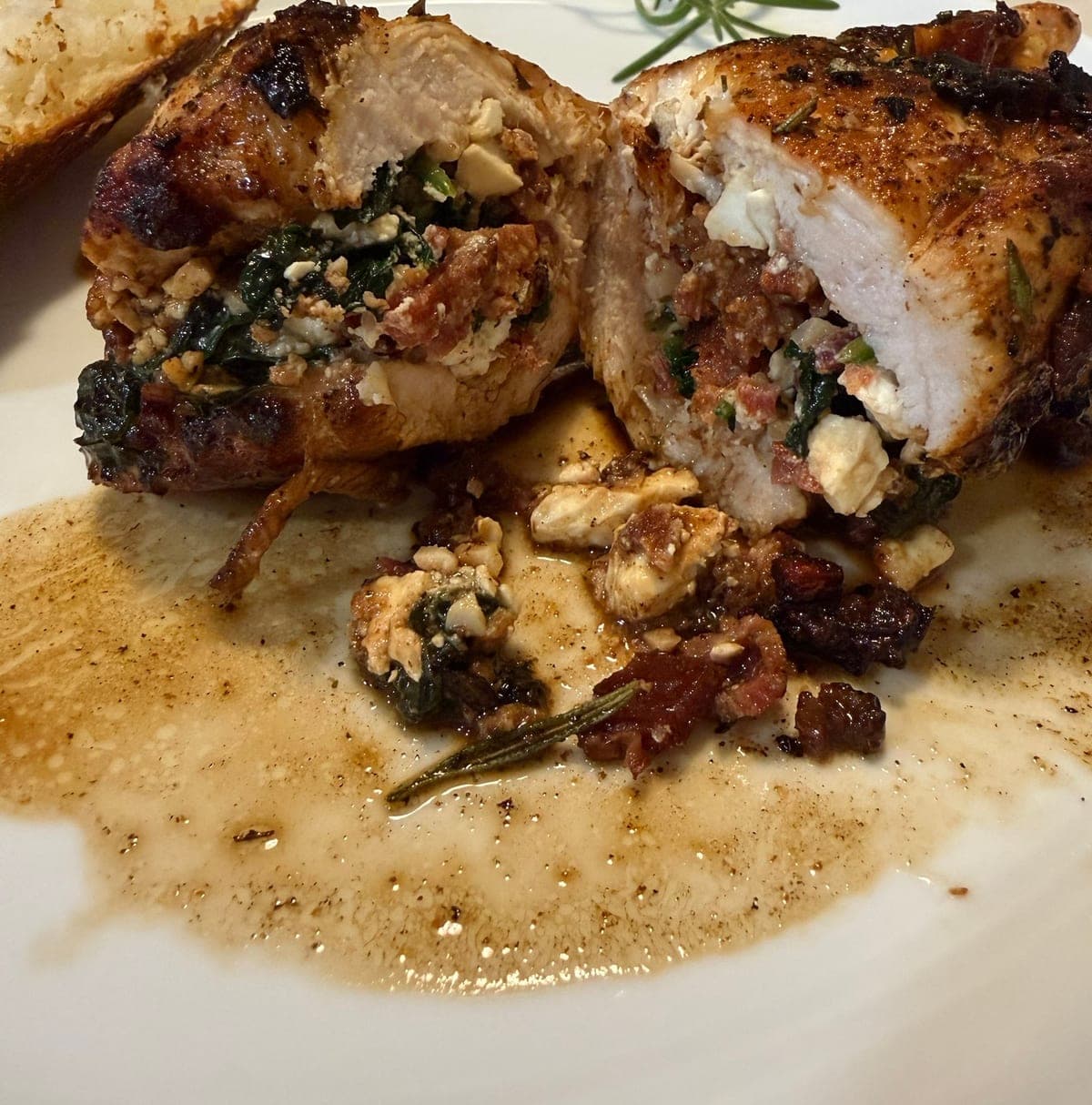
Bacon & Feta Stuffed Chicken with Rosemary Butter
The spinach wilts in a spoonful of the reserved bacon fat rather than clean oil, so the stuffing is seasoned before it ever goes in. Basting finishes the last few degrees, which keeps the crust from going past deep gold while the middle catches up. Don't skip the pan sauce — the fond, the rendered rosemary butter and the lemon all end up in it, and the chicken is a plainer thing without it.
Cook the bacon in a skillet over medium heat until crisp, 6 to 8 minutes. Lift it onto a paper towel, let it cool enough to handle, and chop it small. Pour off all but 1 tablespoon of the fat — that spoonful is what seasons the filling, so don't wash the pan.
Add the garlic to the reserved fat and cook until it smells sweet rather than raw, about 30 seconds. Add the spinach and turn it over until it has just collapsed, about a minute. Take the pan off the heat and let it cool; warm spinach will melt the feta into paste.
Combine the chopped bacon, the wilted spinach and the feta. If the feta came out of brine, pat it dry first — wet cheese makes a filling that runs out of the pocket instead of staying in it.
Cut a deep pocket into the thick side of each breast, working from the side and stopping short of the far edge. An even thickness matters more than a big pocket: a breast that tapers cooks through at the thin end while the thick end is still raw.
Divide the filling between the pockets and pack it in. Tie each breast closed with two 8-inch lengths of butcher's twine, one near each end of the pocket. Two ties hold the opening shut along its whole length — a single one in the middle leaves the ends free to gape as the meat contracts in the pan, which is where the filling escapes.
Pat the outside of each breast dry, then rub it all over with a third of the olive oil before any seasoning goes on. A dry surface sheds a dry rub — most of it ends up in the pan — and the film of oil both holds the salt, pepper, smoked paprika and chopped rosemary where you put them and pulls the fat-soluble flavor out of the paprika and the rosemary instead of leaving it sitting on the surface as powder. It also wets the whole breast evenly, so the crust browns in one shade rather than in patches.
Season the oiled breasts all over with the salt, pepper, smoked paprika and the finely chopped rosemary.
Heat the remaining olive oil in a large oven-safe skillet over medium-high until it shimmers. Sear the breasts 4 to 5 minutes a side, until deeply golden. Move them as little as possible — the crust releases on its own when it has formed.
Drop the heat to medium-low and add the butter and the rosemary sprigs. Once the butter has melted, tilt the pan and spoon it over the chicken again and again, covering the pan between bastes, until the thickest part reads 165°F away from the filling. Basting rather than raising the heat is what stops the outside darkening past gold.
Move the chicken to a plate and tent it with foil, leaving the sprigs behind. Pour the stock into the pan and scrape up everything stuck to the bottom. Simmer about 2 minutes, until it has tightened slightly, then discard the sprigs and stir in the lemon juice off the heat.
Snip both ties off each breast, spoon the pan sauce over, and serve straight away.
Made it? Be one of the first to rate it.