
Chicken Marsala With Pancetta
The pancetta fat left in the pan becomes the base for the Marsala, so the pork seasons the whole dish rather than just garnishing it. A cornstarch slurry at the end thickens the sauce more reliably than reduction alone.
Bring a large pot of salted water to a boil and cook the fettuccine to al dente. Reserve a cup of the water before draining — the sauce tightens as it sits, and starchy water loosens it without thinning the flavor.
Coat a large skillet lightly with olive oil and set over medium-high heat. Add the pancetta and cook until it has rendered its fat and the pieces are crisp at the edges. Lift it out with a slotted spoon and set aside, leaving every bit of the fat behind — that fat is the sauce's backbone, not a by-product.
Put the flour on a plate. Pat the cutlets dry, season lightly with salt and pepper, then dredge in the flour.
Heat the pan with the pancetta fat over medium-high heat, adding a touch more olive oil if needed to make about 2 tablespoons. When it shimmers, shake the excess flour off the cutlets and lay them in. Sauté, turning once, until browned on both sides — thin cutlets only need a few minutes per side. Remove the cutlets and pour off the excess fat.
With the pan still over medium-high heat, add the Marsala and scrape up the browned bits from the bottom. Cook until reduced by about a quarter — a full cup takes a few minutes, and the smell turns from sharp to nutty when it is there.
Stir the cornstarch into the cold water until no grains are left, then stir the cream into the pan. Add the slurry a little at a time, letting it come back to a simmer between additions, until the sauce coats the back of a spoon. Adding it gradually matters — cornstarch sets as it heats, and a sauce taken too far can't be loosened back.
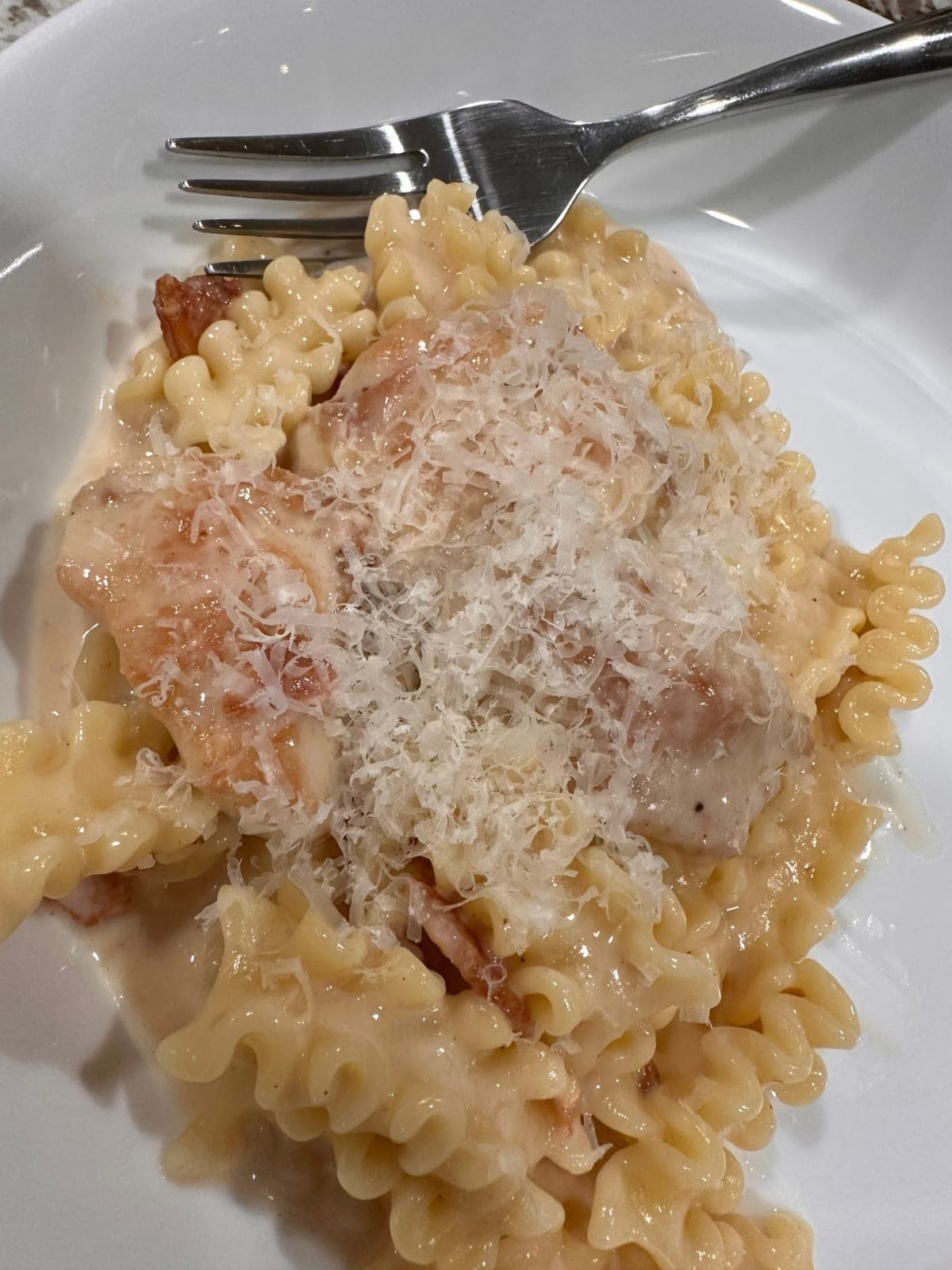
Return the chicken and pancetta to the pan, turning to coat, and reheat a minute. Divide the fettuccine between plates, spoon the chicken and sauce over it, and scatter the parsley. If the sauce has tightened while the pasta drained, loosen it with a splash of the reserved water before it goes on.
Grate the parmesan over each plate rather than stirring it into the pan. Off the heat it stays as distinct threads on top; in a cream sauce already thickened with cornstarch it goes stringy and drags.
Made it? Be one of the first to rate it.